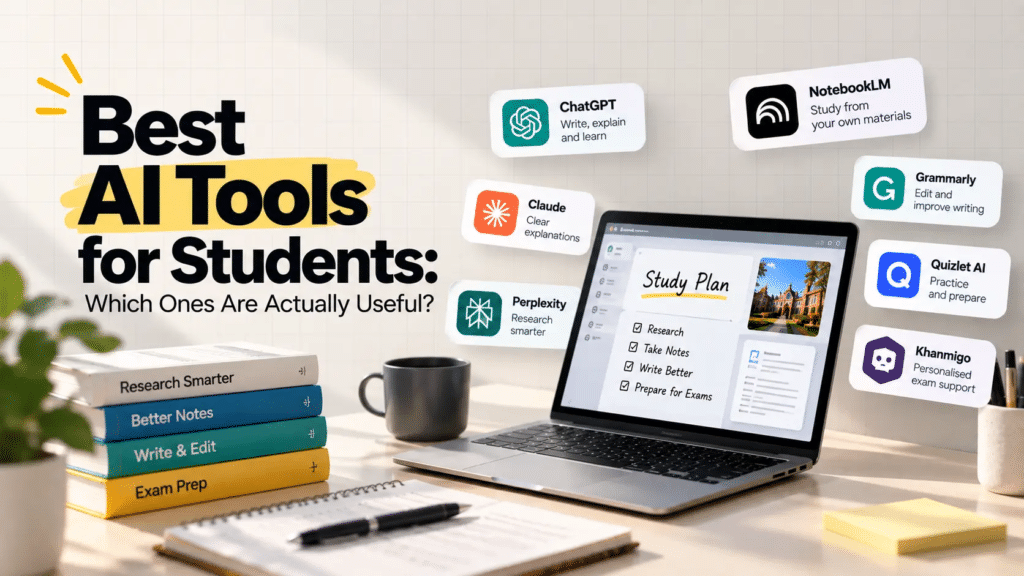
写论文卡壳、笔记记了从不再看、考前一周才开始慌——如果你也是这样的学生党,这篇文章就是为你写的。2026 年,AI 已经不是要不要用的问题,而是怎么用才正确的问题。
Stuck on papers, never reviewing your notes, panicking one week before exams — if that sounds like you, this guide was written for you. In 2026, the question is no longer whether to use AI, but how to use it correctly.
本文按学生党最高频的三大场景——写论文、做笔记、备考——逐一拆解哪些 AI 工具真正好用、哪些只是噱头,并给出可以直接抄的正确用法。文中所有工具都有慷慨的免费额度,零预算也能全部用上。
This guide breaks down the three most common student scenarios — writing papers, taking notes, and exam prep — covering which AI tools genuinely work, which are just hype, and the correct ways to use them. Every tool listed has a generous free tier, so a zero budget is no problem.
写论文、做笔记、备考三大场景各有对应的 AI 利器 / Each scenario — papers, notes, exams — has its own AI toolkit
📋 本文目录 / Table of Contents
- 一图看懂:三个场景该用什么工具 / The Right Tool for Each Scenario
- 写论文:从选题到降重 / Writing Papers: From Topic to Polish
- 做笔记:从课堂到知识库 / Note-Taking: From Lectures to a Knowledge Base
- 备考:从复习计划到模拟考 / Exam Prep: From Study Plans to Mock Exams
- 学术诚信红线与防坑指南 / Academic Integrity: Red Lines & Pitfalls
- 学生党 AI 工具总览表 / Complete Tool Comparison Table
- 常见问题 FAQ / FAQ
一图看懂:三个场景该用什么工具 / The Right Tool for Each Scenario, at a Glance
| 场景 / Scenario | 核心需求 / Core Need | 首选工具 / Top Picks |
|---|---|---|
| 写论文 / Writing papers | 读文献、列提纲、润色、查重意识 / Reading literature, outlining, polishing, plagiarism awareness | Kimi、NotebookLM、DeepSeek、Claude / Kimi, NotebookLM, DeepSeek, Claude |
| 做笔记 / Taking notes | 课堂记录、资料归档、复习检索 / Lecture capture, archiving, retrieval for review | Notion AI、NotebookLM、Obsidian / Notion AI, NotebookLM, Obsidian |
| 备考 / Exam prep | 复习计划、刷题讲解、模拟考 / Study plans, practice questions, mock exams | ChatGPT、豆包、Anki、Gamma / ChatGPT, Doubao, Anki, Gamma |
写论文:从选题到降重的正确打开方式 / Writing Papers: The Correct Workflow, From Topic Selection to Polish
写论文是学生党对 AI 需求最刚性的场景,也是最容易踩坑的场景。正确的姿势不是「让 AI 代写」,而是把 AI 当成文献助理 + 逻辑教练 + 语言编辑。
Paper writing is where students need AI the most — and where they stumble the most. The right approach is not “let AI write it for you,” but treating AI as a literature assistant + logic coach + language editor.
第一步:读文献——别让 AI 凭空编引用 / Step 1: Reading Literature — Never Let AI Invent Citations
- 工具推荐:Kimi / NotebookLM。Kimi 免费额度足够一口气读完几十篇中文文献;NotebookLM 只基于你上传的 PDF 回答,几乎不会胡编,还能把文献变成 20 分钟的「AI 播客」,走路时就能「听」完文献综述。
Tools: Kimi / NotebookLM. Kimi’s free tier can chew through dozens of Chinese papers in one go; NotebookLM answers only from your uploaded PDFs — hallucination is rare — and even turns them into a 20-minute “AI podcast” you can listen to on the go. - 正确用法:先让 AI 总结每篇文献的「研究问题、方法、结论」,再让它对比多篇文献的观点差异,最后由你亲自读关键段落后动笔写综述。
The right way: have AI summarize each paper’s research question, method, and conclusion; then compare viewpoints across papers; then read the key passages yourself before writing the review.
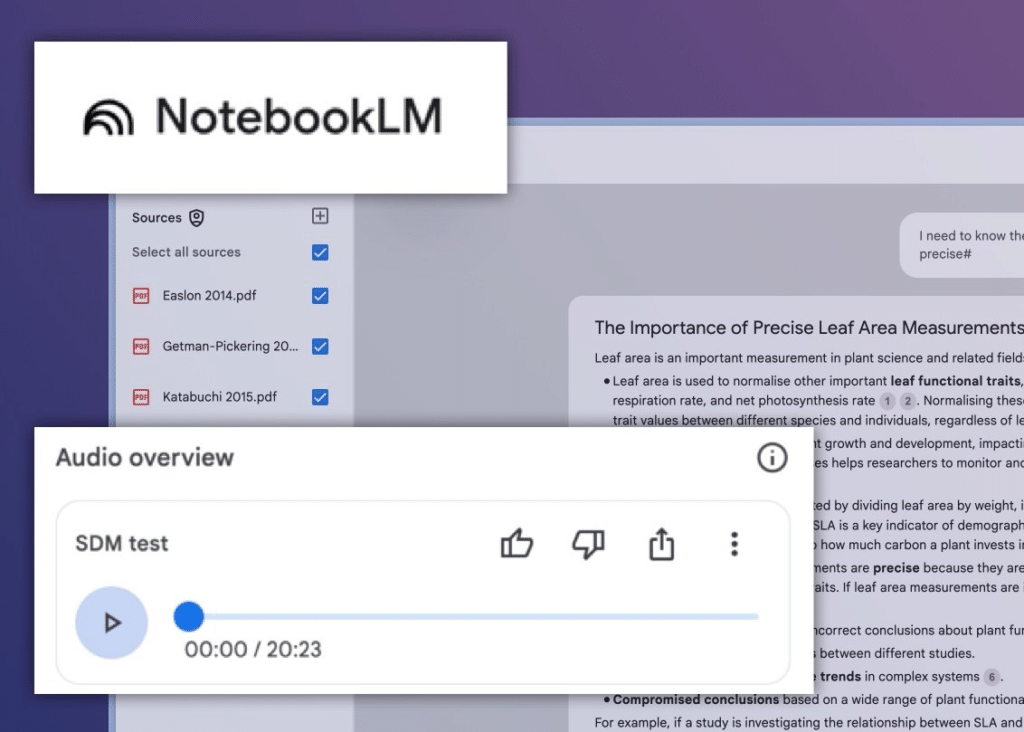
NotebookLM:只基于你上传的文献回答,是写文献综述的安全选择 / NotebookLM: answers only from your uploaded sources — the safe choice for literature reviews
📌 提示 / Tip: 「帮我找 5 篇关于 XX 的文献」这类请求,通用 AI 有概率编造不存在的论文标题和 DOI。要查真实文献,请用 Google Scholar、知网,或专门的学术搜索工具。
For requests like “find me 5 papers on XX,” general-purpose AI may fabricate titles and DOIs. Use Google Scholar, CNKI, or dedicated academic search tools for real references.
第二步:列提纲——让 AI 帮你搭骨架,你来填血肉 / Step 2: Outlining — Let AI Build the Skeleton, You Add the Flesh
把选题和研究问题发给 DeepSeek 或 Claude,让它生成 2–3 个不同思路的提纲,并说明每部分的写作逻辑。你选一个最顺手的改。这一步能把「 staring at a blank page 」的时间从两天压缩到半小时。
Send your topic and research questions to DeepSeek or Claude and ask for 2–3 outlines with different approaches, explaining the logic of each section. Pick one and adapt it. This compresses two days of staring at a blank page into thirty minutes.
第三步:润色语言——AI 是编辑,不是作者 / Step 3: Polishing — AI Is Your Editor, Not Your Author
- 中文润色:把段落发给 Claude 或 DeepSeek,指令用「请在不改变原意的前提下,提升学术性、修正语病」,而不是「帮我写一段」。
Chinese polishing: send paragraphs to Claude or DeepSeek with instructions like “improve academic tone and fix grammar without changing the meaning” — not “write me a paragraph.” - 英文润色:英文摘要是中国学生的重灾区。把自写的中文摘要翻译+润色成英文,比直接让 AI 写英文摘要更可控、查重率更低。
English polishing: the English abstract is a pain point for Chinese students. Translating and polishing your self-written Chinese abstract into English is more controllable and yields lower duplication rates than having AI write it directly.
做笔记:从课堂记录到个人知识库 / Note-Taking: From Lecture Capture to a Personal Knowledge Base
笔记的核心不是「记下来」,而是「找得到、用得上」。AI 的价值在于把零散的课堂记录变成结构化的、可问答的知识库。
The core of note-taking is not “writing it down” but “finding and using it later.” AI’s value lies in turning scattered lecture notes into a structured, queryable knowledge base.
方案一:Notion AI——课程管理 + 笔记整理一体化 / Option 1: Notion AI — Course Management + Notes in One Place
- 适合人群:习惯电子化、愿意花半小时搭一次模板的人。用「课程数据库」管理每门课的笔记、作业、截止日期,Notion AI 负责总结长笔记、提取待办、把课堂速记整理成结构化条目。
Best for: students who like digital notes and will spend 30 minutes setting up a template once. Manage notes, assignments, and deadlines per course in a database; let Notion AI summarize long notes, extract to-dos, and turn raw lecture scribbles into structured entries. - 学生党技巧:期末周直接把一学期的笔记丢给 Notion AI,让它生成「考点清单 + 薄弱环节分析」,比从头翻书快十倍。
Student hack: during finals week, dump a semester’s notes into Notion AI and ask for a “key-points checklist + weak-area analysis” — ten times faster than rereading everything.
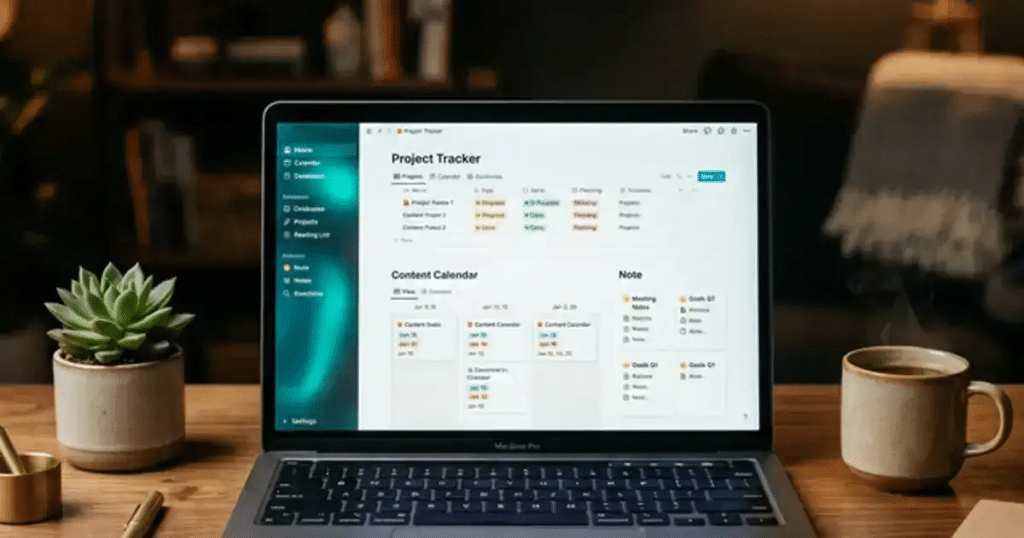
Notion:课程表、作业追踪、笔记归档一个页面搞定 / Notion: schedule, assignment tracking, and notes in one dashboard
方案二:NotebookLM + AI 播客——让笔记「能被听见」 / Option 2: NotebookLM + Audio Overviews — Make Your Notes Audible
把课件、PPT、教科书章节全部上传 NotebookLM,它会基于这些材料生成播客式对谈。通勤、排队、吃饭时「复习」就悄悄完成了——这对记忆型科目(医学、法学、教育学)尤其有效。
Upload slides, PPTs, and textbook chapters to NotebookLM, and it generates podcast-style conversations based on exactly those materials. Review happens quietly during commutes and meals — especially powerful for memory-heavy subjects like medicine, law, and education.
方案三:Obsidian + AI 插件——长期主义者的第二大脑 / Option 3: Obsidian + AI Plugins — A Second Brain for the Long Haul
如果你是读研或长期深耕一个专业的学生,Obsidian 的本地存储 + 双链笔记 + AI 插件(如 Copilot for Obsidian)是免费方案里天花板最高的:笔记永远属于你,AI 负责在几千条笔记里秒速定位关联知识点。
If you’re a grad student or plan to stay in one field for years, Obsidian’s local storage + bidirectional linking + AI plugins (like Copilot for Obsidian) is the highest-ceiling free option: your notes are forever yours, and AI locates related knowledge points across thousands of entries in seconds.
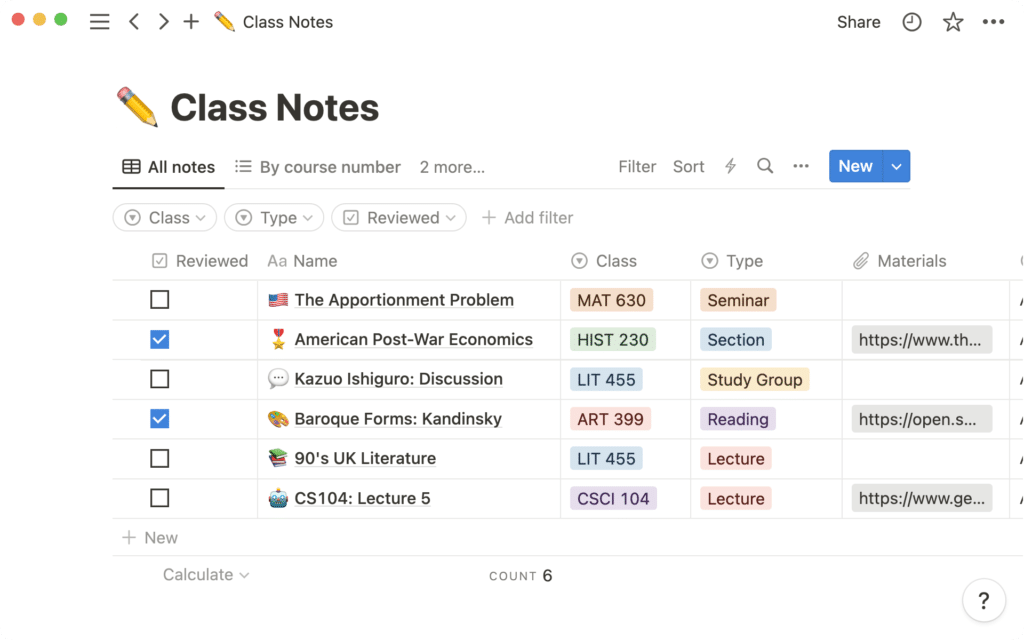
结构化笔记的关键:按课程分类 + 标签化,期末检索一目了然 / The key to structured notes: categorize by course + tag everything for instant retrieval
备考:从复习计划到模拟考 / Exam Prep: From Study Plans to Mock Exams
备考的 AI 玩法核心是三个:制定计划、出题自测、错题讲解。用对了,一门课的复习时间可以压缩一半。
AI-powered exam prep boils down to three moves: making a plan, generating practice questions, and explaining your mistakes. Used well, they can cut review time for a course in half.
1. 制定复习计划 / 1. Building a Study Plan
把考试日期、科目范围、你的可用时间发给 ChatGPT 或 DeepSeek,让它倒排出每日任务表。实测提示词:「我还有 X 天考试,范围是 XX,每天能学 3 小时,请按遗忘曲线安排每日复习和自测计划」。
Send the exam date, syllabus scope, and your available hours to ChatGPT or DeepSeek, and ask it to work backward into a daily task schedule. A tested prompt: “My exam is in X days, the scope is XX, I can study 3 hours a day — build me a daily plan following the forgetting curve, including self-tests.”
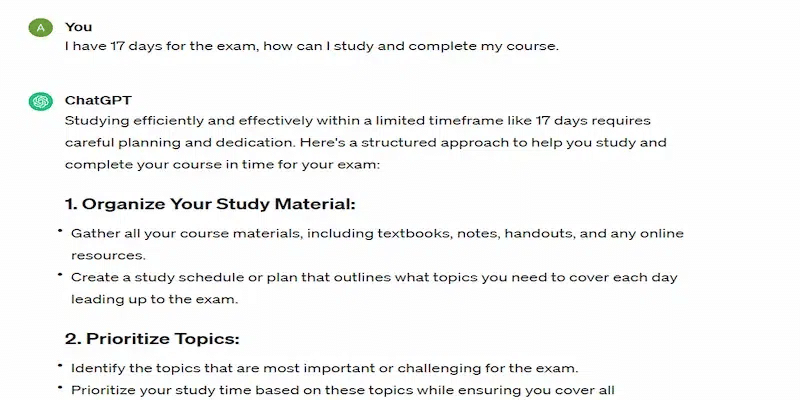
实测:AI 排的计划比你想象的更合理,关键是把真实可用时间如实告诉它 / Real test: AI’s plans are more sensible than you’d expect — the key is honestly reporting your available hours
2. 出题自测:把 AI 变成出题老师 / 2. Self-Testing: Turn AI Into Your Examiner
- 文科:让 AI 根据课件出 10 道论述题和 5 道名词解释,写完再让它按评分标准批改,指出论点漏洞。
Humanities: have AI generate 10 essay questions and 5 term explanations from your notes, write your answers, then have AI grade them against rubrics and point out argument gaps. - 理工科:把错题拍照发给豆包或 DeepSeek,让它用苏格拉底式提问引导你自己想到错因,而不是直接给答案——后者对考试毫无帮助。
STEM: photograph your wrong answers and send them to Doubao or DeepSeek, asking it to guide you to the root cause with Socratic questioning instead of handing over the answer — the direct-answer approach does nothing for your exam performance. - 记忆型科目:让 AI 把知识点转成 Anki 格式的问答卡片,导入后按间隔重复算法复习,记忆效率远高于反复阅读。
Memory-heavy subjects: have AI convert key points into Anki Q&A cards, import them, and review with spaced repetition — far more effective than rereading.
3. 考前冲刺: Gamma 生成复习提纲 / 3. Final Sprint: Gamma for Review Outlines
考前最后一晚,把核心考点发给 Gamma,生成一份视觉化的复习提纲 PDF,比翻 200 页 PPT 高效得多。注意:这是复习「框架」,不是替代你做题。
On the last night before the exam, send your core points to Gamma to generate a visual review-outline PDF — far more efficient than flipping through 200 slides of PPT. Note: this is a review framework, not a substitute for practice problems.
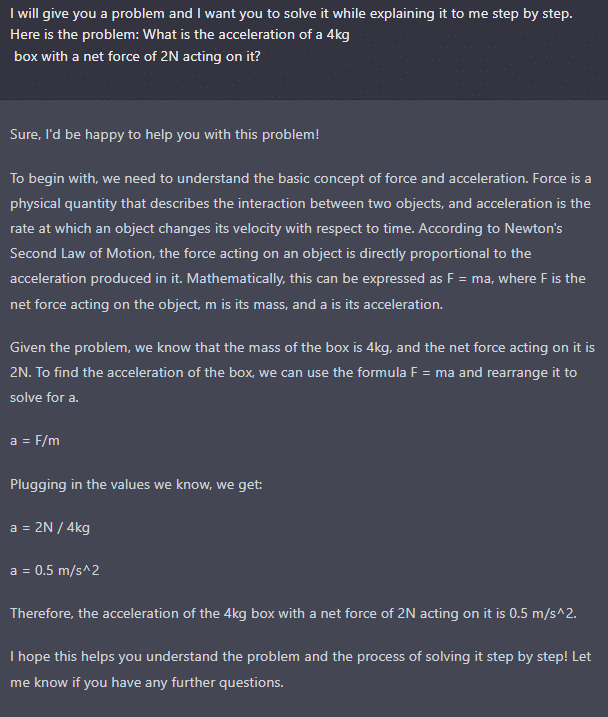
让 AI「讲题」而不是「给答案」,备考效果天差地别 / “Explain it to me” vs “give me the answer” — the exam-prep difference is enormous
学术诚信红线与防坑指南 / Academic Integrity: Red Lines and Pitfalls
这一部分请务必读完。2026 年几乎所有高校都上线了 AIGC 检测,「AI 代写」从学术不端的新名词变成了会被处分的实锤行为。
Please read this section carefully. By 2026, nearly all universities run AIGC detection, and “AI ghostwriting” has gone from a buzzword to a punishable offense.
⚠️ 重要提醒 / Important: 三条红线:① 直接提交 AI 生成的正文;② 引用 AI 编造的文献;③ 用翻译软件+AI 洗稿规避查重。这些都可能被 AIGC 检测判定违规。安全区是:AI 辅助理解、列提纲、改语病、出练习题。
Three red lines: ① submitting AI-generated text as your own; ② citing fabricated references from AI; ③ laundering text through translation + AI to evade plagiarism checks. All can be flagged by AIGC detection. The safe zone: AI-assisted understanding, outlining, grammar fixing, and practice questions.
另外提醒:不要把未公开的实验数据、导师课题内容直接发给云端 AI。涉及课题机密时,用本地部署的开源模型(如 Qwen、DeepSeek)处理。
One more reminder: never send unpublished experimental data or your advisor’s project content directly to cloud AI. For confidential research, use locally deployed open-source models like Qwen or DeepSeek.
学生党 AI 工具总览表 / Complete Tool Comparison for Students
| 工具 Tool | 最佳场景 Best For | 免费额度 Free Tier | 推荐度 Rating |
|---|---|---|---|
| Kimi | 读文献、长文档问答 Reading papers, long-doc Q&A | 长文免费额度高 / Generous free long-text quota | ⭐⭐⭐⭐⭐ |
| NotebookLM | 文献综述、AI 播客复习 Literature reviews, audio review | 完全免费 / Completely free | ⭐⭐⭐⭐⭐ |
| DeepSeek | 提纲、推理、讲题 Outlines, reasoning, tutoring | 几乎无限 / Nearly unlimited | ⭐⭐⭐⭐⭐ |
| Claude | 论文润色、逻辑梳理 Polishing, logic review | 每日高额度 / Generous daily quota | ⭐⭐⭐⭐ |
| Notion AI | 课程管理、笔记整理 Course mgmt, note cleanup | 基础功能+AI试用 / Free core + AI trial | ⭐⭐⭐⭐ |
| Obsidian + AI插件 | 长期知识库 Long-term knowledge base | 软件免费 / Software free | ⭐⭐⭐⭐ |
| ChatGPT | 备考计划、出题批改 Study plans, quiz grading | 每日限额 / Daily limits | ⭐⭐⭐⭐ |
| 豆包 | 拍照讲题、口语练习 Photo Q&A, speaking practice | 完全免费 / Completely free | ⭐⭐⭐⭐ |
| Anki + AI | 记忆卡片、间隔重复 Flashcards, spaced repetition | App免费 / Free app | ⭐⭐⭐⭐ |
| Gamma | 复习提纲、答辩PPT Review outlines, slides | 每日积分 / Daily credits | ⭐⭐⭐ |
| Perplexity | 资料检索 Research search | 基础无限次 / Unlimited basic | ⭐⭐⭐⭐ |
| 秘塔 AI 搜索 | 中文资料检索 Chinese research search | 完全免费 / Completely free | ⭐⭐⭐ |
常见问题 FAQ / Frequently Asked Questions
Q:用 AI 辅助写论文会被查出来吗? / Will AI-assisted paper writing get flagged?
看用法。「AI 辅助理解 + 自己动笔 + AI 润色语病」属于合理使用,AIGC 检测率通常很低;「直接粘贴 AI 生成正文」几乎必被检出。核心判断标准:观点和论证是不是你自己的。
It depends how you use it. “AI-assisted understanding + writing it yourself + AI grammar polish” is generally acceptable, with low AIGC-detection rates; “pasting AI-generated text directly” will almost certainly be flagged. The core criterion: are the arguments and reasoning yours?
Q:完全没有预算,学生党必选哪三款? / Zero budget — which three are must-haves?
DeepSeek(讲题+提纲,几乎无限免费)+ NotebookLM(读文献+播客复习,完全免费)+ 豆包(拍照讲题,完全免费)。这三款组合覆盖 90% 的学习场景。
DeepSeek (tutoring + outlining, nearly unlimited) + NotebookLM (paper reading + audio review, totally free) + Doubao (photo Q&A, totally free). This trio covers 90% of study scenarios.
Q:NotebookLM 国内能用吗? / Does NotebookLM work in mainland China?
需要科学上网。如果条件不允许,平替方案是:读文献用 Kimi,播客式复习用通义听悟(把课件转文字再总结),效果打八折但零门槛。
It requires a VPN. If that’s not an option, alternatives: use Kimi for paper reading, and Tongyi Tingwu to transcribe and summarize lecture audio — about 80% as effective with zero barriers.
Q:用 AI 做的笔记会不会考试不让带? / Are AI-made notes allowed in exams?
开卷考试一般允许自带笔记(无论是否借助 AI 整理),闭卷考试什么都不让带。但要注意:有些课程开卷考也开始限制电子设备,纸质 AI 整理笔记通常没问题,考前确认考场规则。
Open-book exams generally allow personal notes (regardless of AI assistance); closed-book exams allow nothing. Note: some open-book exams now restrict electronic devices, so printed AI-organized notes are usually safe — confirm the rules beforehand.
Q:AI 出的练习题靠谱吗? / Are AI-generated practice questions reliable?
七八成靠谱。AI 出的题适合「覆盖面自测」,但难度和考点精准度不如老师真题。正确姿势:让 AI 先根据课件和历年真题风格出题,再让它自己给出评分标准,自己对照批改。
About 70–80% reliable. AI-generated questions are great for coverage self-testing, but their difficulty and precision don’t match real past papers. Best practice: have AI generate questions based on courseware and past-exam style, then ask it for grading rubrics and self-grade against them.
写在最后 / Final Thoughts
AI 不会让努力学习的人失业,但会让「会学习」和「不会学习」的差距进一步拉大。学生党使用 AI 的黄金法则只有一条:让 AI 做重复劳动,你把省下的时间花在真正需要思考的环节。
AI won’t replace students who work hard — but it will widen the gap between those who know how to learn and those who don’t. The golden rule for students using AI is simple: let AI do the repetitive work, and spend the saved time on the parts that genuinely require thinking.
📌 建议收藏本文,开学、期中、期末前各复习一遍。如果你有自己独家的高效 AI 学习法,欢迎在评论区分享给其他同学。
📌 Bookmark this post and revisit it at the start of term, midterms, and finals. If you have your own secret AI study methods, share them in the comments!
© 2026 Practical AI & Software Guides · 本指南基于真实学生场景实测 / Based on real student workflows · 更新于 / Updated: 2026-10-20